
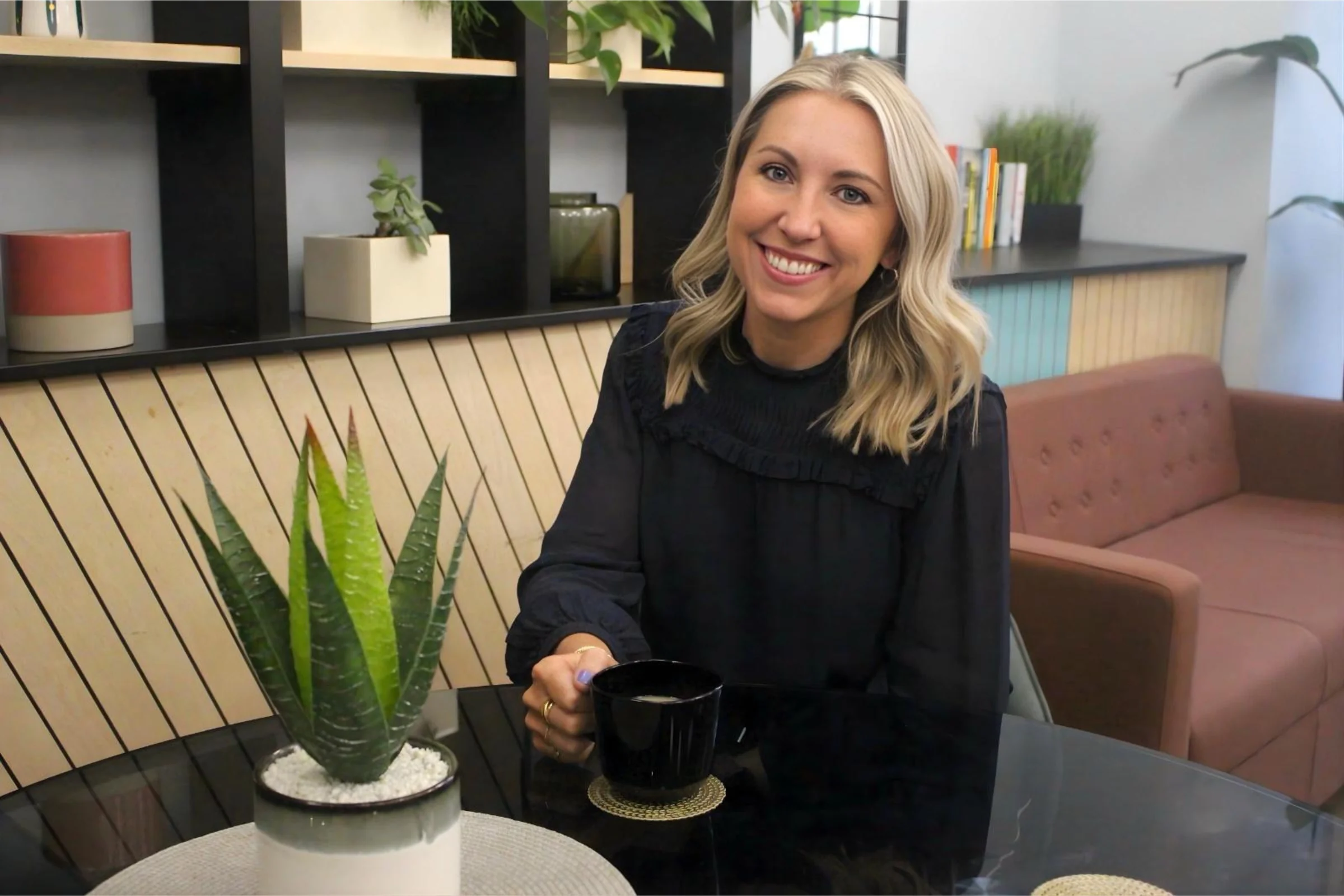
Caroline Falconer
Caroline is Oakdale’s Chief Executive Officer and a Consultant Clinical Psychologist with over 20 years’ experience working across the NHS and independent sector. She joined Oakdale in 2019, serving as Clinical Director for seven years before becoming CEO.
Caroline founded Oakdale’s neurodevelopmental pathways and services, establishing and developing its specialist autism and ADHD provision and supporting its growth into comprehensive services for children, young people and adults. She has also been instrumental in developing and expanding Oakdale’s children and young people’s mental health services, drawing on her extensive clinical expertise in neurodevelopment, children’s mental health, learning disability, complex behaviour and trauma.
As CEO, Caroline is leading Oakdale through its next phase of growth and development, with a strong focus on widening access to high-quality psychological and neurodevelopmental care, embracing digital innovation and developing services that respond to the changing needs of the people and communities Oakdale supports. She is particularly passionate about care that is evidence-based, neuroaffirmative and inclusive, while maintaining the highest standards of clinical quality and governance.
Central to Caroline’s leadership is her belief that exceptional care depends upon an exceptional organisational culture. She is passionate about building a collaborative, caring and supportive workforce where people feel valued, have a voice and are empowered to develop, challenge and innovate. She believes that how an organisation looks after its people is intrinsically linked to the quality of care it provides.
Alongside her leadership at Oakdale, Caroline is regularly invited to contribute to television, radio and wider media discussions on psychology, mental health and neurodevelopment, helping to make complex psychological topics accessible and relevant to a wider audience.
Publications:
Reid, C. Sholl, C. & Gore, N. (2013) Seeking to prevent residential care for young people with intellectual disabilities and challenging behaviour: examples and early outcomes from Ealing ITSBS. Tizard Learning Disability Review, Vol 18 No. 4, pp171-178
Sholl, C, Reid, C & Udwin, O (2014) Preventing residential care for young people with intellectual disabilities and challenging behaviours: the development of the Ealing Intensive Therapeutic and Short Breaks Service. ACAMH Occasional Paper 32: Intellectual Disabilities and Challenging Behaviour, pp15-25.
Phillips, N, Armstrong, H, Reid, C, Rossiter, R and Morgan, S. (2014) Are we making a difference? Measuring the value of our work with children and young people who have a learning disability and behaviour that challenges their families. Intellectual Disabilities and Challenging Behaviour. ACAMH Occasional Paper (32) Chapter 8.
Gore, N., Brady, S., Cormack, M., McGill, P., Shurlock, J., Jackson-Brown, F., Reid, C., Singh, R., Legge, A., Saville, M. & Wedge, S. (2015). Residential school placements for children and young people with intellectual disabilities: Their use and implications for Adult Social Care. National Institute for Health Research School for Social Care Research.
Reid, C, Gill, F, Gore, N, and Brady, S (2016) New ways of seeing and being: Evaluating an acceptance and mindfulness group for parents of young people with intellectual disabilities who display challenging behaviour. Journal of Intellectual Disabilities, 20(1), pp. 5-17.
Lemmi, V, Knapp , M, Gore, N, Cooper, V, Jackson-Brown, F, Reid, C, and Saville, M. (2016) What is standard care for people with learning disabilities and behaviour that challenges and what does it cost? British Journal of Learning Disabilities, 44 (4). pp. 309-321. ISSN 1354-4187.
Lemmi, V., Knapp, M., Reid, C., Sholl, C., Ferdinand, M., Buescher, A., & Trachtenberg, M. (2016). Positive Behavioural Support for children and adolescents with learning disabilities and behavior that challenges: an initial exploration of service use and costs. Tizard Learning Disability Review, Vol 21 (4), pp. 169-180.
Rye, K., Hicks, S., & Falconer, C. (2018). Evaluating a group for young people who have a sibling with a disability. Learning Disability Practice. Vol 21 (3), pp. 17-23.
Dilks-Hopper, H., Jacobs, C., Sholl, C., Falconer, C. & Gore, N. (2019) The Ealing Intensive Therapeutic and Short Break Service: An Update Five Years On, Tizard Learning Disability Review, 24 (2):56-63.
Ready to begin?
Take the first steps towards clarity and support.